
Heat Transfer Vinyl Manufacturer for Bulk & Custom Production
Factory-direct HTV rolls engineered for garment factories, print shops, and brand owners. Stable adhesion, consistent coating, scalable supply.
This guide explains what HTV is, how it works in garment production, and what factors matter when selecting materials for reliable manufacturing results.
What Is Heat Transfer Vinyl
As a professional heat transfer vinyl manufacturer, we produce HTV films engineered for industrial apparel production.
HTV is a multi-layer film designed for durable garment decoration through heat and pressure. Structure includes: • Colored or textured face film • Heat-activated adhesive layer • Transparent carrier sheet for precision cutting
Built for scalable production, HTV delivers consistent adhesion and reliable wash resistance in bulk manufacturing. Available in roll format for continuous production and sheet format for sampling or short runs.
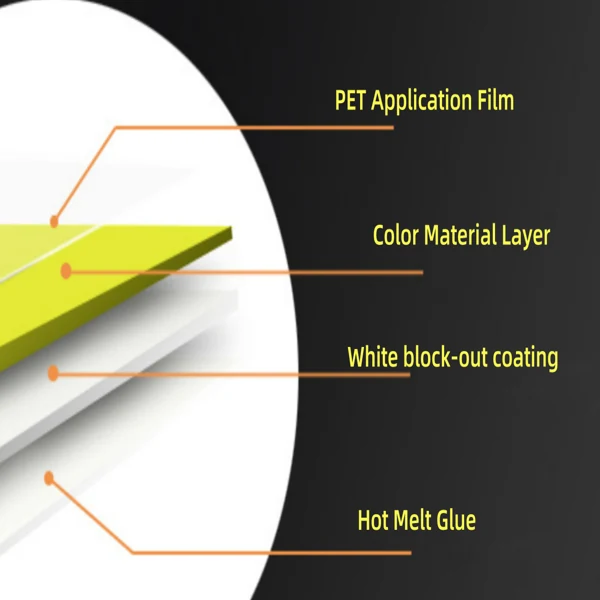
Roll format for continuous production
How Heat Transfer Vinyl Works
HTV application follows three controlled production stages
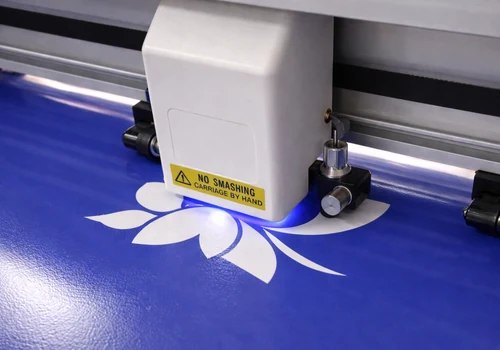
Cutting
Precisely cut through the vinyl layer while keeping the carrier sheet intact. Blade depth and speed are calibrated for clean edges and efficient weeding.
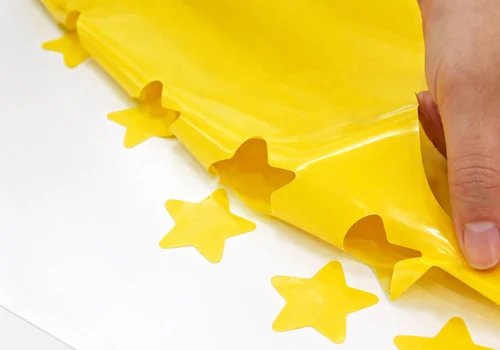
Peeling Off Wasted Viny
After cutting, remove the excess vinyl keeping the carrier sheet intact. Fine details are weeded to ensure precise graphics before heat application.
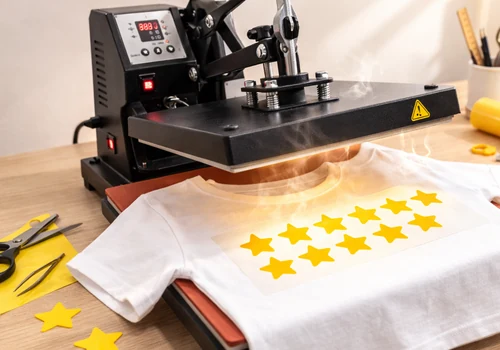
Heat Pressing
Heat and pressure activate the adhesive layer, bonding the film to fabric. Parameters vary by vinyl type and textile composition.
Critical Control Points
Where HTV Is Used in Production
Heat transfer vinyl serves specific production needs where durability, consistency, and clean application are essential for professional garment manufacturing.
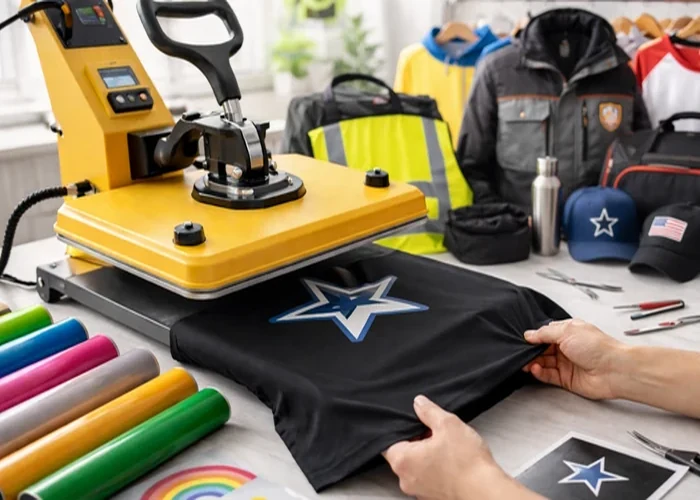
T-Shirts & Casual Wear
Logos, text, and decorative elements where consistent application across large batches is required, particularly for promotional and branded apparel.
Workwear & Uniforms
Company branding and safety markings that must withstand industrial washing cycles and maintain visibility over extended use periods.
Outerwear & Technical Garments
Specialized applications including reflective elements, weatherproof branding, and functional markings for outdoor and performance apparel.
Labels & Identification
Size labels, care instructions, and brand identification where traditional sewn labels are not suitable or cost-effective.
Production Environment Applications
HTV applications in controlled manufacturing environments where consistency, efficiency, and quality control are essential for meeting production specifications and delivery schedules.
Key Material Properties
HTV performance depends on four material factors that directly impact cutting efficiency, adhesion stability, and long-term durability.
Thickness Control
Material thickness influences cutting precision and garment hand feel.Thinner vinyl integrate smoothly with fabric, while thicker films enhance visual impact and require adjusted cutting settings.
Critical for: Blade calibration · Weeding efficiency · Wearing comfort
Adhesion Behavior
Adhesive formulation determines fabric compatibility and bonding stability.Proper adhesion prevents edge lifting and ensures consistent results across bulk production.
Critical for: Fabric match · Press temperature · Durability
Surface Texture
Surface finish affects appearance and cutting performance.Smooth films enable cleaner cuts, while textured finishes may require adjusted blade parameters.
Critical for: Design aesthetics · Cutting accuracy · Efficiency
Wash Durability
Chemical and mechanical resistance define long-term performance.Wash stability depends on adhesive strength, curing control, and end-use requirements.
Critical for: Industrial washing · Compliance · Customer satisfaction
Material Selection Impact
Production Efficiency
Cutting speed, weeding ease, application consistency
Application Success
Fabric compatibility, bond strength, edge adhesion
Long-term Performance
Wash resistance, color retention, edge integrity
Choose the Right HTV Solution
Three supply models designed for different production needs and market strategies.
Standard HTV
Ready-to-ship formulations optimized for high-volume production.Best for: Large-volume factories & distributors
Specialty HTV
Performance-driven materials for differentiated product lines.Best for: Fashion brands & value-added markets
Custom Development
Engineered solutions tailored to specific production challenges.Best for: OEM buyers & industrial applications
Best-Selling Heat Transfer Vinyl Styles
Explore our most in-demand HTV materials trusted by garment factories, print shops, and distributors worldwide.
PU Heat Transfer Vinyl
Soft-touch, stretchable film ideal for cotton and blended fabrics.
View PU Series →PVC Heat Transfer Vinyl
Durable and cost-efficient solution for large-volume production.
Explore PVC Range →Glitter HTV Vinyl
Sparkle finish for fashion, kidswear, and promotional garments.
Discover Glitter →Holographic Heat Transfer Vinyl
Multi-tone reflective finish for eye-catching designs.
Explore Holographic →4-Step HTV Selection Checklist
Before sampling, evaluate these four operational factors:
1. Fabric Compatibility
Identify fiber composition, coatings, and heat tolerance. Adhesive performance varies significantly across cotton, polyester, blends, and treated fabrics
2. Application Setup
Match HTV to your cutting and pressing equipment. Industrial lines require different parameters than desktop or small-scale setups.
3. End-Use Requirements
Define washing conditions, abrasion exposure, and market standards before selecting material grades.
4. Production Volume & Supply Stability
Consider batch size, lead time, and color consistency across large orders. Reliable supply matters as much as adhesion strength.
Decision Framework
Fabric Analysis
Composition, structure, treatments
Equipment Match
Cutting, pressing, production setup
Use Environment
Washing, wear, exposure conditions
Production Scale
Volume, consistency, supply needs
This systematic approach prevents common issues like edge lifting, insufficient adhesion, and production inconsistencies.
Material recommendations are based on these four factors working together, not individual specifications in isolation.
Why Choose Us as Your HTV
Based on your production requirements and application needs, explore our detailed material categories for specific solutions and technical information.
Standard HTV Materials
Proven formulations for reliable production. PU, PVC, and basic specialty materials with established performance characteristics and immediate availability.
Specialty Effect Materials
Advanced visual and functional properties. Reflective, textured, metallic, and performance-enhanced materials for differentiated market positioning.
Custom Development
Tailored solutions for specific applications. Material engineering, color matching, and performance optimization for unique production requirements.
Ready to Start Your HTV Project?
Connect with our manufacturing team to discuss your specific requirements, get material recommendations, and start sample development for your production needs.